
Spider-Man is one of the "Sinister Six" in Unmade Sony Film
What Drew Goddard's movie was actually about and how it changed over time.

In this article, I am going to delve into the history and evolution of Sinister Six, an elusive, unmade film that nonetheless remains a focal point of the live-action Sony Spider-Man Universe (SSU). By bringing greater clarity to a widely misunderstood project, I hope to debunk certain myths and misconceptions about the SSU itself.*
*Please note that I will be using the term “SSU” consistently throughout this article, even though the universe itself had undergone many names since its inception. I will also divide the SSU into two distinct “eras,” separated from one another by the main actors playing Spider-Man: Andrew Garfield (2012-2014) and Tom Holland (2015-present).
ContentsSinister Six Was Never About Fighting Spider-Man
The Evolution of Sinister Six
Please consider subscribing and receive any new post for free via email, or upgrading to a paid subscription to support this publication.
Sinister Six Was Never About Fighting Spider-Man
The Garfield Era
Sinister Six was initially developed as an installment of The Amazing Spider-Man (TASM) franchise. When Sony released the first TASM (dir. Marc Webb) in 2012, it was clearly intending it to be the beginning of a larger, multi-part story, but it had not approached it as a launchpad for a cinematic universe. Following the success of Disney’s Avengers that same year, however, Sony changed gears and decided to expand upon the TASM franchise to realize a Spider-Man Cinematic Universe.
Initially, the topic was first brought up by Sony producer and executive Amy Pascal during an investor call on November 21 2013, where she stated:
“We are going to access Marvel’s full world of Spider-Man characters, so be on the lookout for new heroes and villains.”
Subsequently, on December 12, Sony announced that it had assembled a writer’s room consisting of Alex Kurtzman, Roberto Orci, Jeff Pinkner, Ed Solomon and Drew Goddard “to work on a large-scale story that will encompass several films.”
And with that, what I like to call The Garfield Era of the SSU had officially begun. The plan was to use the upcoming TASM-2 as a launchpad for the larger universe, which in addition to two more previously announced mainline sequels would include the ancillary spinoffs Venom and Sinister Six, all of which would work together as parts of a larger overarching narrative whole.
Here is an excerpt from the press release originally featured on Electro Arrives:
“The five writers, along with the two producers and Marc Webb, have formed a franchise brain trust to expand the universe for the brand and to develop a continuous tone and thread throughout the films. Under the deals, the studio announced that Kurtzman & Orci & Pinkner are writing the screenplay for The Amazing Spider-Man 3, which the studio hopes Webb will return to direct; the film will go into production next fall for release on June 10, 2016. In addition, the team will build on the cinematic foundation laid by Webb, Arad, and Tolmach in the first two movies.
They will expand the franchise as Kurtzman & Orci & Solomon will write the screenplay for Venom, which Kurtzman will direct; also, Goddard will write, with an eye to direct, The Sinister Six, focusing on the villains in the franchise…. Until now, we have approached each film as a separate, self-contained entity, but with this move, we have the opportunity to grow the franchise by looking to the future as we develop a continuous arc for the story….””
While the article established that the film would focus on the villains of the TASM franchise and was part of a larger interconnected multi-film story arc, it didn’t really provide any specifics about the film is actually about.
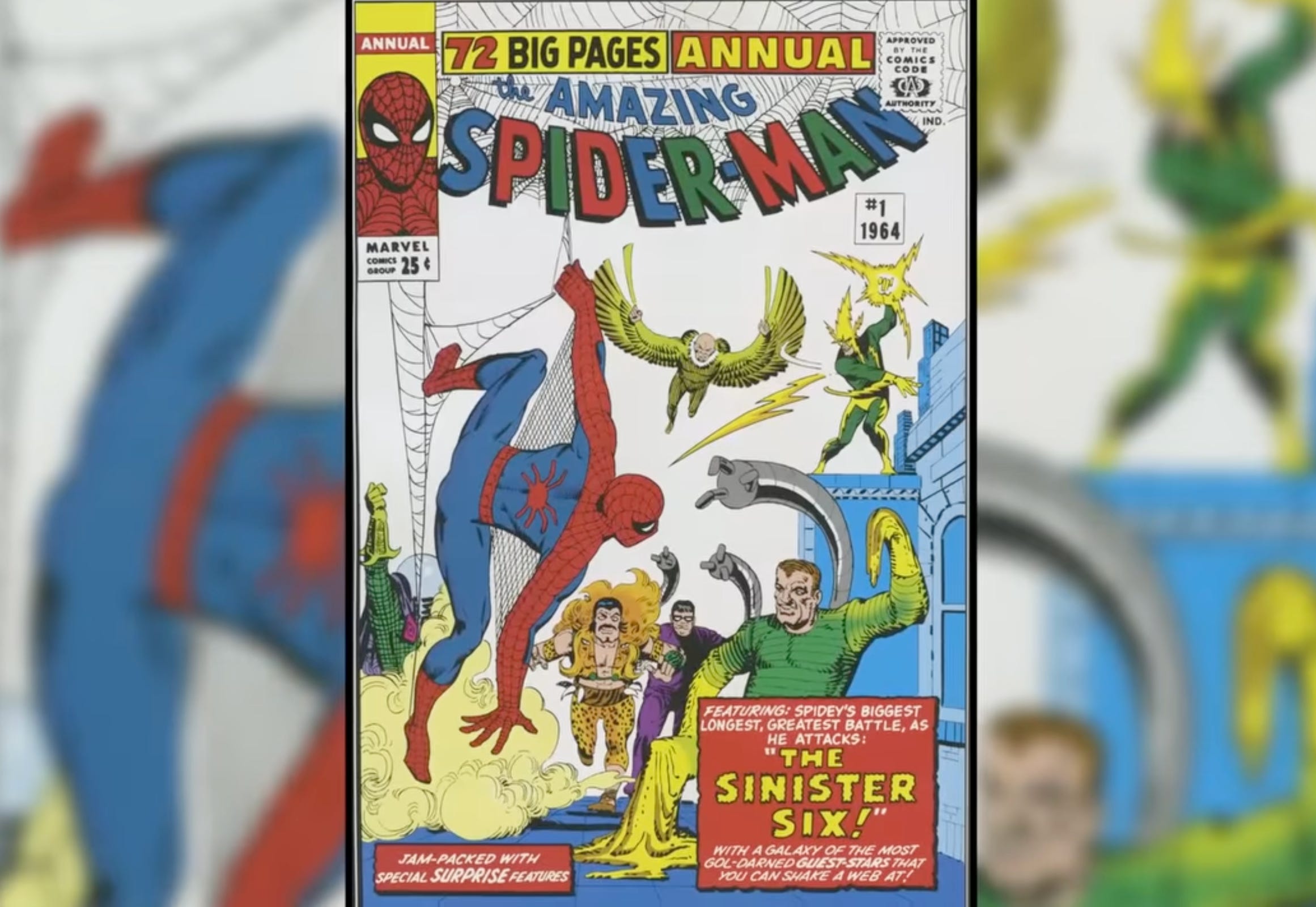
If you know the comics, odds are you assumed that the Sinister Six movie centered on a group of six supervillains teaming up to take out Spider-Man. After all, that’s pretty much why the team came to exist in the comic books in the first place and non-cinematic adaptations of Spider-Man have tended to depict it as such.
But as a matter fact, Drew Goddard’s Sinister Six was NOT a movie about six villains joining forces to take down Spider-Man. Rather, it was a movie where the villains team up with Spider-Man to battle a larger evil, becoming de facto heroes.
This plot setup has never been officially acknowledged by anyone at Sony. Yet, it is evident if you look at the little bits of info about the movie that have trickled out over the years across behind-the-scenes interviews, as well as insider leaks.
The Arad/Tolmach Interview
One of the earliest indications of this came in April 2014 in an article by IGN. Quoting producers Avi Arad and Matt Tolmach, the article by Daniel Krupa opens with the claim that the Sinister Six film “is going to be a tale of redemption, where the villains aren’t necessarily portrayed as villains.”
The way Tolmach describes the spinoff, a key idea of the film seems to be to push back against the traditional moral binary between heroes and villains by depicting the S6 as real three-dimensional characters who have relatable motives and goals.
“There’s no such thing as just a villain,” says Tolmach. “There are villains by virtue of choices that people make but they always begin as humans, as characters. As flawed people; as tragic people. You know great movies have been made about a bunch of “bad guys” who get together to do something…. There’s a huge tradition of it. Those are sometimes the greatest characters to watch, a bunch of broken people coming together for whatever reason.”
Echoing this, Arad adds that at least one of the S6 characters in the film is meant to have a redemption arc, something that audiences love.
“...and that’s what’s so beautiful about the Spider-Man universe. They have amazing stories if you look at it. And everybody’s looking for redemption; they’re unforgiven. Would you see one of the Sinister Six starting to feel like that? Yes. And people love it, by the way. They love when a villain finds his way back because we’re all very forgiving.”
Tellingly, the producers NEVER specify why exactly the S6 get together in the film. Tolmach in particular keeps the reasons behind them getting together ambiguous.
Furthermore, in the very beginning, he explicitly states that they will NOT confirm what role Spider-Man has in the film or if he will even appear in it.
“We’re definitely not going to say what we’re doing in terms of Spider-Man there.”
In fact, the most information that we get regarding Spider-Man is the idea that all the members of the S6 are united by their hatred of Spider-Man. Evidently, the producers were implying that fighting Spider-Man is NOT the reason why the S6 get together, which would mean they’d have to team up for some other reason.
The Sinister Six Featurette
These conclusions are directly supported by the behind-the-scenes featurette Something Sinister This Way Comes by Charles de Lauzirika, which was included on the TASM-2 home video release in August 2014 and has recently been officially released on YouTube. The first half of the 20-minute featurette mostly discusses the Spider-Man Rogues Gallery and the history of the Sinister Six team formations throughout the comics, which is mostly provided via an interview with Spider-Man historian Stephen Saffel, famous for the 2007 book Spider-Man the Icon.
Around the halfway mark, the featurette switches to a discussion of the TASM fran-chise, particularly when it comes to the ending setups of TASM-2, and the difficulties of adapting Sinister Six comics for the big screen. It starts with Saffel’s comments:
“Doing Sinister Six films is going to be a huge challenge. Part of the problem is that your main characters are not characters you can root for.”
The documentary then cuts to Marc Webb, director of TASM 1&2, as well as a key member of the braintrust. As though speaking in response to Saffel’s comment about the inherent challenge with a potential Sinister Six movie, he states:
“If there’s a way that the Sinister Six can become heroes, where you’re rooting for them, where the six bad guys have to fight something that’s even worse than they are and they are… by coincidence, their agenda is aligned with, uh, the forces of good, I think that would be kind of an interesting avenue to that.”
Webb hints that the planned Sinister Six movie is indeed one where audiences can root for what are traditionally ‘bad guys,’ as in this context they become heroes fighting the real villain so unwittingly align with someone representing the forces of good.
Drew Goddard Interviews
In 2015, Goddard began to open up about the unmade Sinister Six Project, explicitly confirming that Spider-Man was indeed slated to be in Sinister Six, which means that the movie was never going to be just about the ‘villains.’ Here are some quotes:
“I’ve always wanted to do a Spider-Man project and to come at it slightly different just felt right for me. I was really excited about that one, but who knows what the future holds. The allure of Peter Parker is strong…”
Source: Drew Goddard, IGN interview Sept 29 2015
““Well, you know the truth is, it’s been… we’re a few years out from any Sinister Six happening, so a lot can change between now and then. But my idea for it was always to make it a big epic Spider-Man movie. ””
Source: Drew Goddard, HeyUGuys interview, Sept 30 2015
Goddard’s description of the film as an “epic” Spider-Man movie fits with Joanna Robinson’s reveal in the book MCU: Reign of Marvel Studios that at least one draft of the film “took Spider-Man and his villains to the Savage Land (in the Marvel comic books, a prehistoric pocket of jungle life hidden in Antarctica), where Spider-Man would ride a T-Rex.” (301) This indicates the movie featured Spider-Man participate directly in high-scale action and adventure sequences, suggesting he had a much bigger role in the film than has been commonly assumed.*
*That Spider-Man appeared in the Sinister Six movie at all was a closely guarded secret at Sony, who refused to clarify this within press releases and statements in 2013-2014. The November 2014 Sony Hacking, which leaked numerous emails, revealed that the character was indeed in the movie, though the exact nature of his role remains largely undisclosed.
Out of all the interviews I’ve found with Goddard, the one by IGN has been the most informative. The writer-director gets candid about his cinematic inspirations and how he approached the challenge of making a Spider-Man film work with six villains:
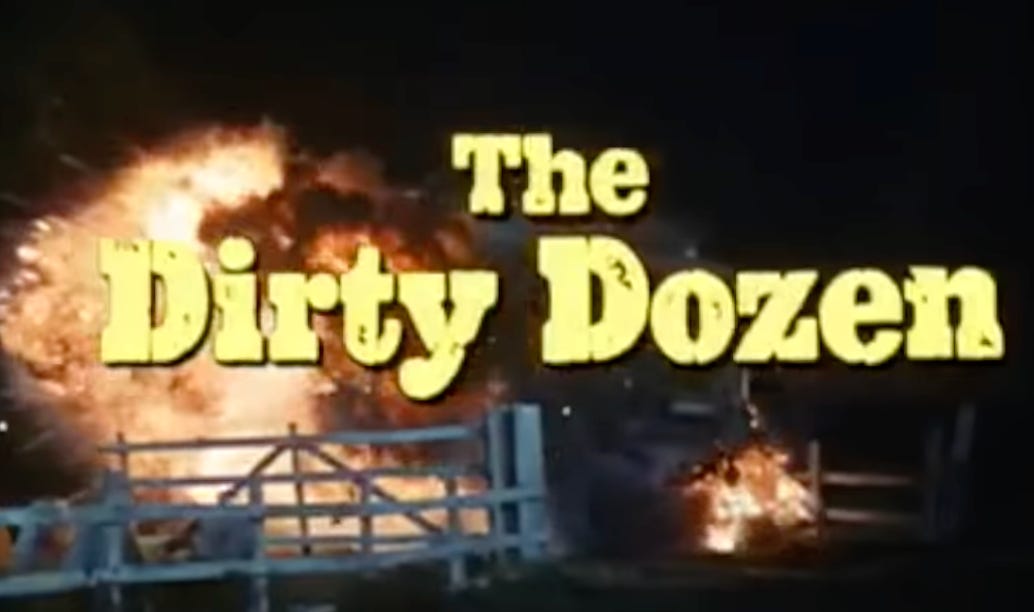
“When you’re doing just a straightforward superhero movie, you don’t need a lot of villains. The focus is on one guy. I think with Sinister, it’s different. To me it’s less about too many villains and more about too many antagonists and there’s a distinction. You never say, like, The Dirty Dozen has too many characters. They’re all villains, or you could argue that. But they’re protagonists. The trick with Sinister, is that I was making everyone the protagonist and less about six-on-one and more about coming at it a little differently…. You can still have protagonists be evil. That’s the secret.”
What Goddard makes clear is that for him the key was to depict the S6 ‘villains’ as protagonists, rather than tell a conventional superhero story, wherein the lone hero has to face off against one or more villains. Thus, he indirectly corroborates that his movie was not about Spider-Man facing off against multiple villains, but rather a movie where the S6 themselves are the heroes of their own story.
Perhaps the more revealing detail that Goddard shares here is the comparison he draws with The Dirty Dozen, a classic 1967 war movie directed by Robert Aldrich.
Set in 1944, the plot follows Major John Reisman (Lee Marvin), who is tasked with gathering together a team of 12 soldiers recruited from murderers, rapists and criminals (some with long sentences, some on death row) to assassinate a group of German Nazis that have taken over a French chateau.
The comparison thus clearly implies that the plot of Goddard’s movie would have a similar setup, meaning somebody (perhaps the US government) would forcibly recruit a bunch of incarcerated Spider-Man villains to take out out the film’s actual villain - someone far more evil than they are, someone requiring multiple superpowered individuals to defeat, someone who could potentially threaten the world itself.
The Leaks
In a leaked email to Tom Hardy, Amy Pascal likewise compared Sinister Six to 1960s men-on-a-mission films, where teams of villainous or morally ambiguous characters fight on the side of good. In addition to The Dirty Dozen, she also references the Westerns The Professionals (1966, dir. Richard Brooks) and The Wild Bunch (1967, dir. Sam Peckinpah). Moreover, she describes it as the “Sex Pistols of superheroes movies,” suggesting the film would have a punk rock aesthetic, and celebrate what some might consider reprehensible or destructive behavior.
“We are going to make the sex pistols of superheroes movies ....where all the characters are the “bad guys”
> Its a sort of celebration of these guys in the vein of the dirty dozen and the professionals and the wild bunch...”
Source: Leaked Email from Pascal to Hardy (June 7 2014):
That Spider-Man would fight alongside them is also confirmed in a thread between Michael Deluca and Pascal, which indicates that Goddard took inspiration from a story of the Ultimate Spider-Man comics, where Norman Osborn blackmailed the hero into joining his team, a variant of the Sinister Six known as the “Ultimate Six” or “Norman Osborn’s Six.” This suggests that in the film Spider-Man was not going to work with the S6 of his own free will but would also be forcibly recruited.*
* The email the thread does not reveal who blackmails him or why, which means that Osborn was not necessarily the recruiter/blackmailer. Additional leaked Sony emails I’ve found since the initial publication of this article suggest Goddard’s final roster as of September 2014 consisted of Dr. Octopus, Sandman, Black Cat, Vulture, Mysterio and Spider-Man himself. Green Goblin was almost certainly not going to be in the movie at that point as Sony wanted to avoid rehashing the villain. Given all this, I think the US government or some agency creating the Sinister Six team is what makes the most sense.
Finally, some insider info was provided to the pop culture blog Badassdigest, a site with a good track record of providing verified leaked behind-the-scenes info on movies. Here is what Devin Faraci wrote about the potential plan Sony had on October 7 2014 when info started trickling out about Sony’s negotiations with Disney to have Spider-Man appear in the MCU:
“Spider-Man coming into the Marvel Cinematic Universe? That’s a big deal. But get this: it’s the THIRD DIFFERENT Spider-Man plan I’ve heard in the last week. Other things I’ve heard from insiders:
- Sony is going to soft reboot Spider-Man with The Sinister Six, having a new actor playing a Spidey who works with the villains The Dirty Dozen style to take down a larger threat.”
Everything Faraci reports here, including the film performing a “soft reboot” of Spider-Man with a new actor (more on this later) lines up with the other leaks and publicly available information.
From all this, we can extrapolate that Sinister Six was going to challenge the traditional moral binaries of the previous TASM films by having Spider-Man join forces, perhaps unwillingly, with a cadre of villains, presenting this as a necessary “evil” in the face of what was likely a world-ending threat. Had the film been made and released in 2016, as planned, it would’ve certainly drawn comparisons to Warner’s Suicide Squad (2016, dir. David Ayer), a movie with a chaotic, punk-rock aesthetic about a bunch of DC Comics supervillains forced to fight on the side of good by the US government.
The Setups of TASM-2
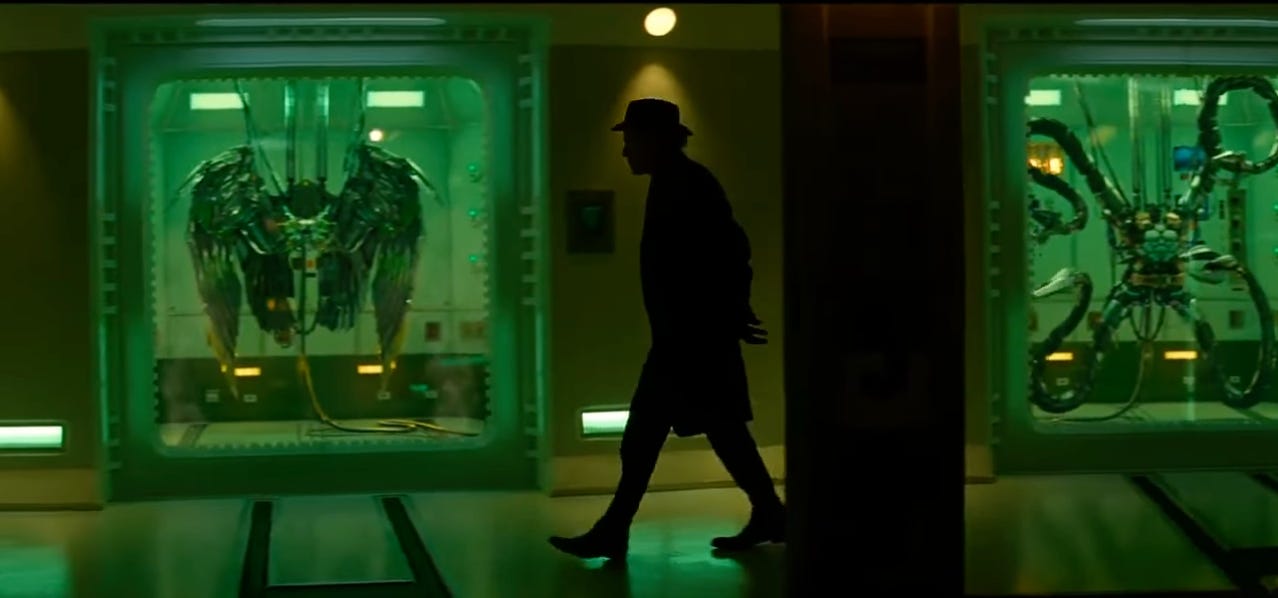
Now that we’ve established what Sinister Six was really going to be about, let’s talk about its relation to TASM-2. It is commonly thought that the ending of this film, which teases the formation of a team of villains meant to hunt down Spider-Man, was directly setting up the events of Goddard’s Sinister Six movie.
But that’s not entirely true.
Its first priority was to set up the plot of TASM-3, which was initially going to be the next SSU movie and had been conceived as the concluding chapter of the TASM trilogy prior to Sony’s decision to make a full-blown expansion into a Spider-Man universe. Its script had already been in development for several months by the time the Sinister Six project was announced at the end of 2013.
While Sony didn’t announce a release date for Sinister Six in the original press reveal, later interviews and articles would establish that the film was intended to come out after the release of TASM-3 in Summer 2016 but before that of TASM-4 in 2018.*
*Leaked emails clarify that Sony originally planned on giving Goddard’s film a third quarter 2016 date, preferably November, so TASM-3 and Sinister Six would be released in the same year. Venom would then follow in 2017, likely August.
Thus, the sequence of the Gentleman walking through the Oscorp Special Projects division alongside the end credits, which provide viewers with visual schematic teases of the Oscorp technology that could be used by a villain, was meant to foreshadow the formation of the S6 in the third TASM movie, rather than Goddard’s movie.
“In Oscorp’s Special Projects, we see, we get hints at… there are glimpses of, there are implications of the accoutrements of villains that will either be in the Sinister Six’ first iteration or will eventually move through the Sinister Six.”
Source: Jeff Pinkner, Something Sinister, Aug 2014
Despite all the teases, however, the actual roster of villains meant to appear in the group had not been settled upon when TASM-2 came out in theaters. Webb stated that he believed that some characters, such as Dr. Octopus and Vulture, were essential members of the S6, while others remained open questions.
“It’s tricky because we’re not exactly sure if all those people are gonna be in The Sinister Six, or even in the next movie,” says Webb. “Like the Mysterio mask, I just think looks really cool. And I love Mysterio, but we haven’t all agreed on it, but I just forced it in because I thought it looked cool.”
Marc Webb, Something Sinister, Aug 2014
“Well, I think that we’re still hammering out the details of what the Sinister Six are going to be but… there are certain, fundamental, almost iconic characters within the Sinister Six that you can’t mess around with, Ock being one of them, Vulture being one of them, Goblin being one of them.”
Marc Webb, IGN interview, May 5 2014
One member certain to be included was Green Goblin.
A scene excised from the final cut of TASM-2 revealed that the head of Norman Osborn (Chris Cooper), who died in the beginning of TASM-2, was preserved in a jar within the Special Projects division. According to Webb, the intent was to resurrect Norman and have him return as a new Green Goblin, who would be both the main villain of the third TASM movie, as well as the leader of the Sinister Six.


“Yeah, we were talking about the Sinister Six…. Chris Cooper was going to come back and play the Goblin. We were going to freeze his head, and then he was going to be brought back to life…. Well, that was going to be the main villain. He was going to come out and lead the Sinister Six. We had talked about Vulture a little bit too....”
Source: Marc Webb, Den of Geek interview, Aug 17 2017
Meanwhile, Jeff Pinkner’s comments indicate that the S6 founded by Norman would only be the first iteration of the group, meaning a different incarnation would arise in the future. In line with this, Goddard has stated to IGN that the roster for his Sinister Six movie would not necessarily be the same one previously teased in TASM-2.
Nonetheless, there were definitely discussions between Webb and Goddard about character setups in the TASM films that would also play out in his film.
““I had to talk to Drew Goddard and make sure these things were going to be played out in the future universe,” he says. “There are some very specific plans, for example, for [Doc] Ock and for Vulture. Or the man in the hat at the end of the first movie. All those things emerge with varying degrees of emphasis.””
Source: Marc Webb, Grantland, May 5 2014
This means the third TASM was going to introduce the more traditional version of the S6, which would try and fail to destroy Spider-Man. Building on this, Goddard would then depict another incarnation of the group – likely consisting of several returning members and new faces – being forced to work with Spider-Man.
Many of these long-term plans, however, would ultimately remain unrealized.
The Evolution of Sinister Six
Shifts After TASM-2 Came Out
Hollywood franchise filmmaking is highly reactive.
One installment’s critical and commercial performance directly informs the creative decisions and choices a studio makes on what comes after in order to address and improve on the perceived “issues” of the work that preceded it. And this can create considerable problems for telling longform stories across multiple films.
Sony’s plan was to use TASM-2 as launchpad or foundation for the expanded universe and have the subsequent three films - TASM-3, Sinister Six, and Venom - all connect as part of a larger cohesive serialized story arc. So, when TASM-2 grossed less than expected in theaters and scored a polarizing “51%” score on Rotten Tomatoes in May 2014, Sony began re-evaluating its plans and analyzing what went wrong.
“...I think we all said: “let’s build a universe correctly and… let’s let the story keep evolving , and let’s make sure each movie is a big emotional step for Peter and that the bad guys have a reason to find each other and build this group of the Sinister Six over the course of two or three movies.””
Source: Alex Kurtzman, Something Sinister, Aug 2014
Based on the various leaked emails and industry reports, some of the Sony execs’ take-aways were that the TASM movies were too dark and brooding, that their storylines and villains felt redundant or rehashed, that the franchise needed to recapture the “fun” of Spider-Man and with that, its appeal to family audiences. A recurring thought was that Sony now could not really continue the SSU with another TASM movie, that something new and different was needed that could perhaps rehabilitate both the Spider-Man brand and character. The proposition of making Sinister Six the next SSU release thus began to look more and more attractive.
What may have been a deciding factor is an incident around July 12-13, when star Andrew Garfield decided to skip a Sony gala event in Rio de Janeiro, snubbing Sony Entertainment chairman and CEO Kaz Hirai. It’s been widely speculated, though never fully confirmed, that this event led to him being fired from Spider-Man.
Reportedly, Hirai had a preplanned speech, where he would’ve formally announced Garfield’s TASM-3 return in May 2016 (a month earlier than the previous date of June 10). Less than two weeks later, on July 23, 2014, Sony instead announced that Goddard’s ‘supervillain team-up,’ which previously had not had a release date, would now come out on November 11, 2016, while TASM-3 was being pushed back to May 4, 2018, with the fourth installment’s status now being unknown.
Sinister Six was thus anointed as the next SSU movie, meaning its script would now have to be informed by and so react to the reception of TASM-2.* Whether or not Garfield had been fired at this point, Sony had essentially cancelled TASM-3 or, at least, the version Webb planned to conclude his trilogy. Keep in mind, TASM-3 was intended to be closely linked in terms of story to both TASM-2 and Sinister Six. Its removal from the sequence meant that the planned storyline about a resurrected Norman Osborn creating the first incarnation of the S6 with the intent of killing Spider-Man would now be completely dropped.
*Goddard presumably wasn’t able to do much writing on the picture prior to the end of May 2014 due to his pre-existing commitments to the Netflix series Daredevil. Once his exit as showrunner was finalized, he was able to fully focus on the Sony project. So any changes from any plans or outlines made prior to the TASM-2 release could be easily incorporated.
In turn, rather than build off narrative links and character setups established in the previous chapter, Sinister Six would now have to introduce most, if not all, team members of the S6 and still tell a complete story. All this could explain why, despite the heavy emphasis the SSU brain trust initially placed on serialized storytelling (in fact, one of the main reasons Sony hired the brain trust was because its members had extensive experience in serial television), Goddard would claim in 2015 that he actually designed Sinister Six as a standalone, self-contained picture that could work under different schemas and was not reliant on any pre-existing setup or continuity.
““My vision of that movie was a summer annual… you didn’t have to worry about continuity. It was just, ‘We take Peter, put him on an adventure, we put him back in his life.’ I intentionally wanted a movie that didn’t have to worry about mythology and continuity. It was important to me to make a movie that could stand on its own. So the good news is, you know, [laughs], it slots in very well to any plan anybody ever wants. We just need to let a couple years go by, I think.””
Source: Drew Goddard, IO9 interview, Sept 22 2015
One cannot discount the possibility that Sinister Six was always planned to be self-contained enough to work both within the larger TASM story arc and as its own movie. But all available evidence suggests that, following the negative reception of TASM-2, Sony wanted to decouple Goddard’s movie, which it was quite bullish on, from what came before though without completely abandoning the TASM continuity.
This would certainly align with the leaked information provided to Badassdigest about Sinister Six performing a soft reboot of Spider-Man with a new actor, which would have to happen if Garfield had indeed been fired in July 2014. In any case, by the time Goddard delivered a finished draft of the script (approximately in December 2014), the film had evolved from Chapter 3.5 of TASM into a largely independent work.*
*Tellingly, the September 2014 leaked roster featured none of the villains introduced previously in the TASM films. It did include Black Cat, however, meaning Sony was looking to tie Sinister Six into the Black Cat and Silver Sable film. Canceling the original TASM-3 basically gave Goddard more freedom to make the movie he wanted. The new TASM-3, were it to be made, would then likely have to build on and follow the events of Sinister Six.
The general impression seems to be that Sony (or at least Amy Pascal) was quite gung-ho on the script. The problem was that, by that point, Sony had suffered a massive hack that compelled it to radically change the direction of the Spider-Man franchise.
Shifts after the Sony Hacking
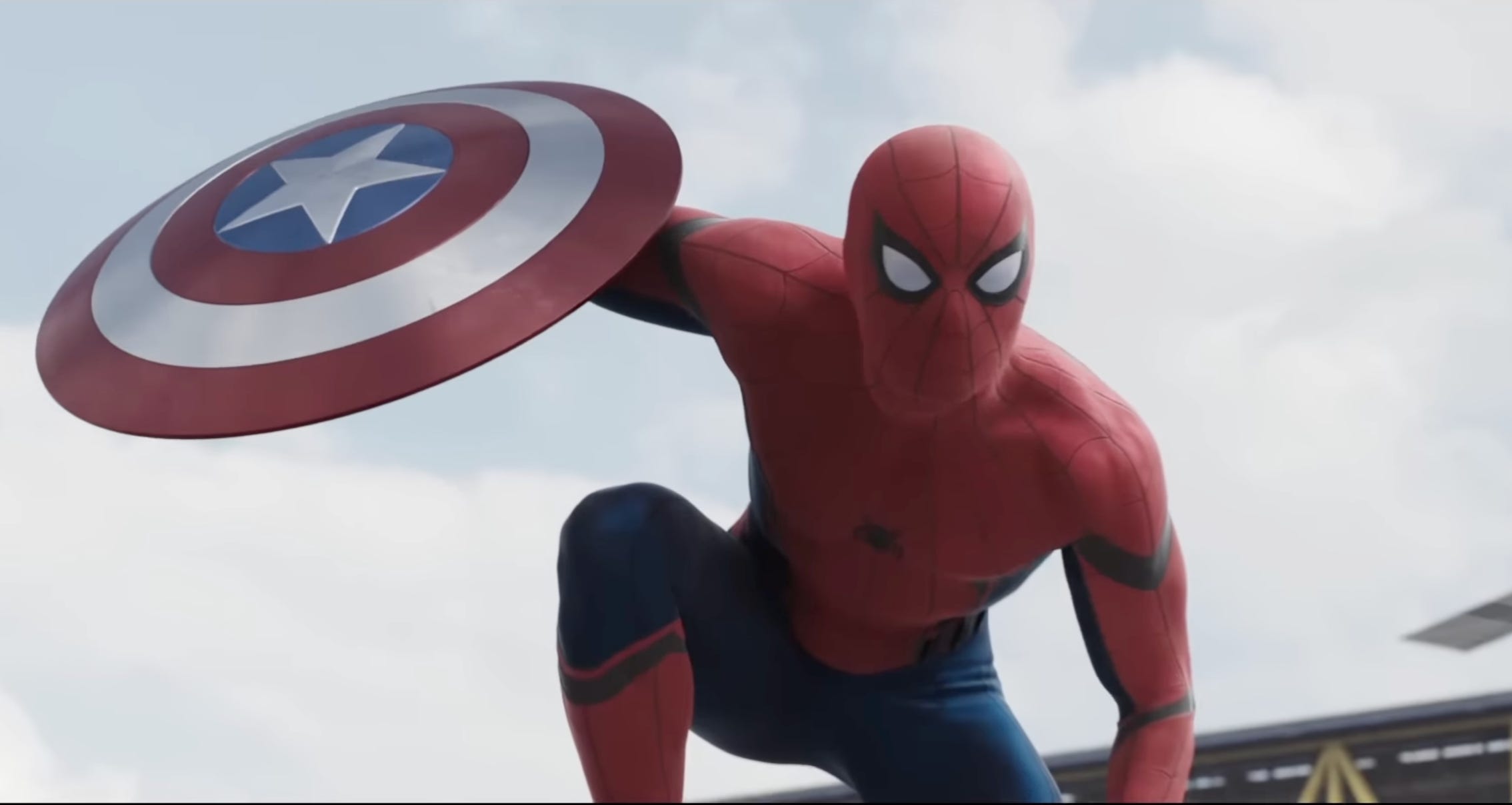
The November 2014 Sony Hack is considered a key reason why the company ended up cutting a deal with Disney in February 2015 to license Spider-Man to the MCU.
Discussions about such a deal, in fact, had begun sometime in the latter half of 2014 prior to the hacking. Without going into a lot of details, per the leaked emails, if a deal were made, Spider-Man would make a debut appearance in the upcoming MCU film Captain America: Civil War, at the time only known as Captain America 3.
Sony was uncertain, as to what effect or relation it would have on Sinister Six. Could Spidey’s appearance set up Sinister Six? Or would it not fit with it in terms of continu-ity and so preclude Sony from being able to make the film? Should they then maybe contractually require another solo Spider-Man movie to be made for a 2017 release to make up for the loss of a 2016 release? Will they be able to continue to build on Sinister Six to expand their universe, as previously planned? A lot of things were still undetermined, as Goddard would be working on his script up until December.
The talks fell apart in late October-early November, only to resume after the public got wind of the fact that the possibility existed due to the leaks that followed the hacking. Fan interest in seeing Spidey in the MCU helped convince Sony to indeed make the deal happen, which led to Spider-Man/Peter Parker appearing in Civil War.
Only now, he would be played by Tom Holland. And rather than set up Sinister Six, his appearance signified the beginning of a new era of the SSU.
While development of the mainline TASM films was now fully cancelled, that of the ancillary ones transitioned over into the Holland era. By this point, there were three such carryover projects: Sinister Six, Venom, and Black Cat and Silver Sable.
Each would now have to be re-evaluated and revised to no longer bear any connection to the TASM world and continuity. Only Venom (2018, dir. Ruben Fleischer) would eventually reach the big screen. Black Cat and Silver Sable remained in active development until around 2018, when it was scrapped in favor of two standalone solo films, neither of which ended up getting made.
“Sony will no longer release its Spider-Man villain movie ‘The Sinister Six’ in November of 2016 as previously planned, said a person involved in its production. The studio will rethink its approach to the film, which remains in development, in light of the new agreement with Marvel.”
Source: Ben Fritz, Wall Street Journal, Feb 10 2015
Meanwhile, Sinister Six essentially transformed into a continuously deferred long-term milestone project, one that Sony has unfortunately to this day still not been able to realize. To explain what I mean, I need to discuss how Sony’s general approach to the cinematic universe had changed from the early days of the Garfield era, which structurally resembled that of the early Warner/DCEU model.
The initial plan called for a big sequel movie (Batman v. Superman for Warner, TASM-2 for Sony) to act as the fulcrum of the larger cinematic universe and lead into multiple spinoff or sequel projects that were closely tied to it in terms of narrative continuity.
Sony had already begun scaling back on seriality and continuity in the aftermath of TASM-2’s reception. In the Holland era, it would lean further into this direction, essentially shifting to the Disney/MCU model, which entailed making several self-contained solo superhero films that would ideally launch their own respective franchises, while simultaneously setting the stage for a mega-crossover franchise.
“Right now, it’s sort of like Iron Man when you did the first Iron Man. Right now, these first movies are establishing these characters.”
Source: Amy Pascal on the ancillary films after the release of Spiderman: Homecoming, Collider, July 18, 2017
Sony’s “pilot episode” for the ancillary SSU titles and, in that sense, its equivalent of the MCU’s Iron Man (2008), was the aforementioned Venom, a horror comedy focused on a monstrous antihero with a penchant for eating bad guys’ brains. Despite getting bad reviews, Venom proved to be a huge commercial success, grossing over $800 million worldwide. This led Sony to greenlight more solo superhero origin story films, such as Morbius (2022), Madame Web (2023), and Kraven the Hunter (2024).
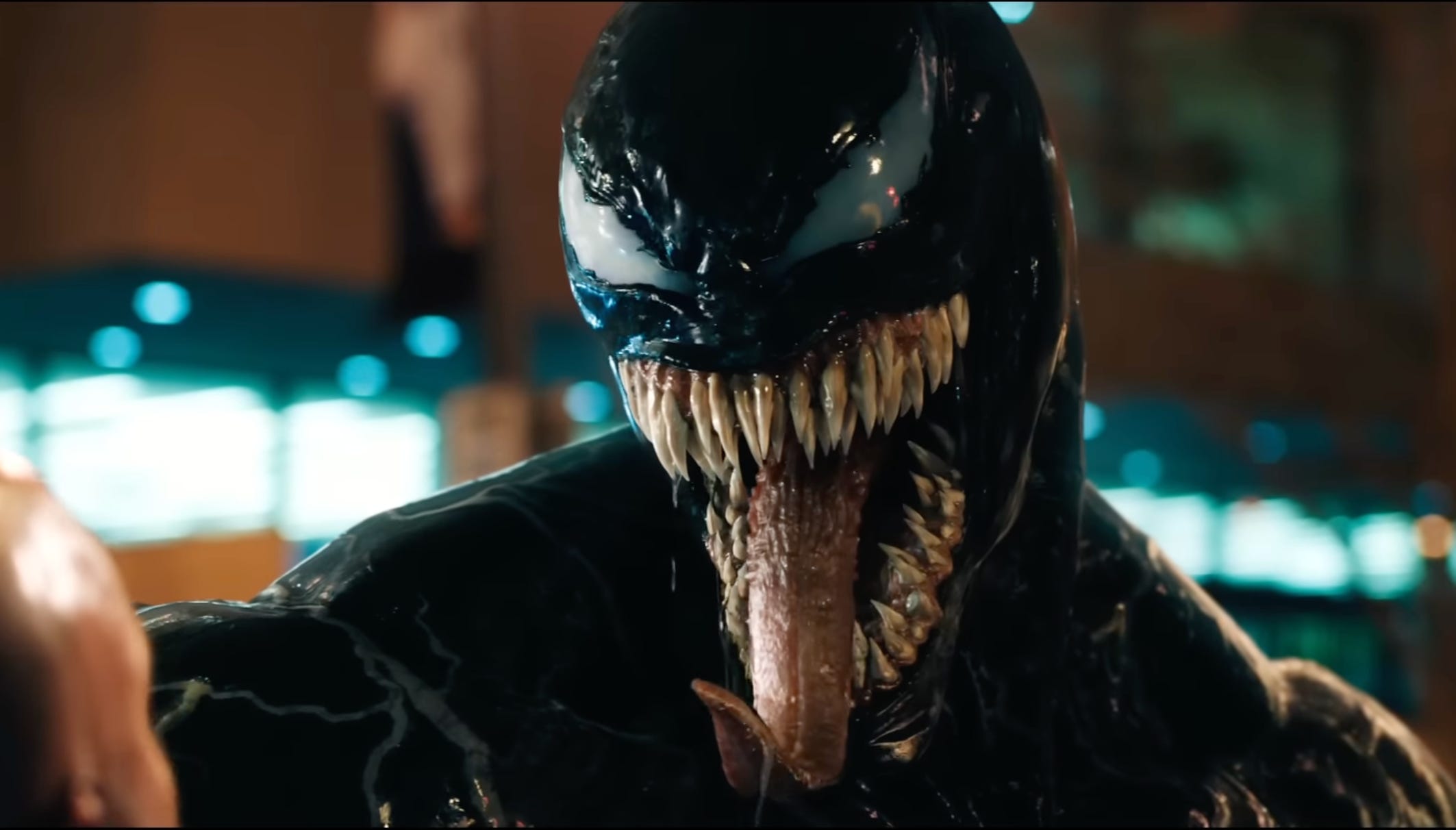
Though not bereft of world-building elements, each had its own self-enclosed narrative and tone. Key to this was Sony’s decision to establish the main characters as having no history with or ties to Spider-Man, despite them originating in subordinate roles to the webslinger in the comics. Including examples from unmade projects, these roles can be broken down into four categories:
supporting heroes (Madame Web, Silk, Jackpot)
antiheroes (Black Cat, Silver Sable, El Muerto)
villains that later became antiheroes (Venom, Morbius)
true villains (Kraven)
Such a deviation from the source material has proven controversial among comic book purists, especially when it comes to the adaptation of the webslinger’s rogues gallery. Sony’s apparent policy in the Holland era is to never actually have genuine villains as protagonists. When it comes to Venom and Morbius, for instance, the studio bypassed the characters’ time as bonafide Spider-Man bad guys and presented them as antiheroes in the adaptations right off the bat.
Meanwhile, Kraven - the sole (at the moment) representative of category d - was reimagined as an antihero who hunts criminals and murderers, while protecting nature and wildlife. With the exception of Madame Web then, all the leads of the ancillary live-action SSU movies have been morally ambiguous protagonists, who don’t mind brutally murdering bad guys yet adhere to their own moral codes and remain (mostly) committed to safeguarding the lives of the innocent.
The ultimate, though never openly acknowledged, goal of establishing all these superheroes was to eventually bring them together in a mega-crossover movie that would constitute Sony’s response to Avengers. And this movie, in case you haven’t guessed it yet, was meant to be Sinister Six.
““All of these villains that we now have in our universe happen to be characters that are in the Sinister Six. There may be something that happens with that.””
Source: Amy Pascal, from the end of Worldwide Web-Slinger featurette for Spider-Man: Far From Home, Oct 7 2019
Despite Goddard’s claims, the film as envisioned back in December 2014 could not really work within the context of the SSU after the MCU deal. Rather than team up Spider-Man with his sworn enemies, the film would bring him together with a bunch of other Sony heroes and anti-heroes, whom he wasn’t met.*
*To be clear, Sony wanted to potentially include villains introduced by the mainline Holland Spider-Man films in the new S6 roster. This is why a reformed Vulture (Michael Keaton) appeared in the credit scene of Morbius, where he stated that he wants to “do some good.” Despite what others may claim, he has never said that he wants to fight Spider-Man.
And where the former incarnation was written as a spinoff/reboot of the TASM films, the latter is intended to be a franchise movie that works specifically within the continuity established within the SSU following the MCU deal.
What I would argue has remained consistent across the two eras though is the central concept of Sinister Six, which is that of Spider-Man teaming up with the S6 to stop a larger, possibly world-ending threat.* In the same vein, the new incarnation of the movie was also never going to be about the S6 teaming up to fight Spider-Man. (That premise, when you think about it, wouldn’t make any logical sense, given that most of the SSU leads are neither villains, nor have any history with Spider-Man at all.)
* Imagine, for instance, Spider-Man teaming up with Venom, Morbius, Vulture, Kraven, and Madame Web to battle an invasion of symbiotes led by their evil god Knull. Were the movie to happen now, it could potentially introduce yet another incarnation of Spider-Man, one that is specific to the SSU, due to Holland’s remaining exclusive to the MCU.
Conclusion
That Sony has never stopped wanting to make Sinister Six is obvious, given the repeated teases throughout interviews over the years and the setups that have appeared in the SSU movies themselves. So, why has it still not happened?
For one thing, outside of Venom, the SSU pictures have, sadly, not been successful, in part due to the efforts of antifans and “critics” that reject them on general principle. For another, Sony’s long-term plans for the Holland era experienced some rather significant changes and revisions due to unforeseen external factors.*
* I intend to write a whole other article to explain the shifts that happened to the SSU during the Holland era. For the moment, I will say that, had things gone according to plan, Holland’s Spider-Man would have crossed paths with Tom Hardy’s Venom years ago.
As someone that actually likes the heroes the SSU has established so far and believes most of the ancillary Spider-Man movies to be underrated, I sincerely hope that one day Sony will indeed make a legitimately good Sinister Six movie that delivers on the various setups and teases of the preceding installments. At this point, it doesn’t seem likely, but then again, forgotten superheroes have a tendency to unexpectedly return.
And the SSU is still alive, despite many having proclaimed it dead.
But what about you?
Do you like any of the SSU films at all? Would you like to see some iteration of Sinister Six? What did you think of Goddard’s take? Any thoughts on how it evolved over time?
Fascinating stuff. When I was in prison, I read a little about this chaotic period (in my last months of freedom, I did get to see "Amazing Spider-Man 2" and hear the ambitious post-ASM2 plans. You left out the scuttlebutt about an Aunt May movie!
As a big comic fan, I was curious as to how a Sinister Six film would work. My interest was mild until I heard someone -- Goddard, maybe -- compare the idea to "The Wages Of Fear", which was just wildly ambitious and exciting to me. I was thrilled to see whatever that was.
Later, I actually got pretty excited for this wave of Sony "villain" movies. My interest was ideological -- Spidey had such a great rogue's gallery, and many of them were repugnant, while a few others genuinely had redeeming qualities. More notably, Spider-Man has, in many instances, had rehabilitative attitudes towards many baddies. I thought, for the sake of criminal justice, these films could be a teachable moment. You could show these characters, written off as rogues, explored as human and dynamic, one after the other, not "bad people" but people who made choices and compromises to get to where they end up -- on the other side of justice, against a superhero. I thought it could somehow change the discussion and allow people a chance to stop before blindly labeling people as criminals.
Of course, they immediately dropped the ball with "Venom". I remember being infuriated by a conversation late in the film between Eddie and the symbiote where Eddie is explaining this juvenile difference between "good guys" and "bad guys" (i.e. people worthy of eating) as basically a relatively-easy gut call. All moral ambiguity out the window, moreso with Morbius and Kraven also suddenly turned into heroic figures. They lost the immediate hook -- building up a character audiences could like, and then forcing audiences to root for them against Spider-Man.
It is frankly amusing to know that Sony wanted, somehow, to wrangle all those characters together in a future movie, because there is so little to nothing in any of those films suggesting they might find commonality with each other. What a ridiculous idea.
Thanks for posting. I really love your stuff and I wish there was more movie journalism like this.