

In this scrapbook article, I am going to talk about how Kane Parsons’ Backrooms adheres to the structural convention that I have termed the “demystifying prologue.” I make the case that the opening prologue sequence of Backrooms should’ve been cut, as it undermines the film’s sense of mystery, and that this is a common problem with Hollywood-produced films in the science-fiction, fantasy, and horror genres.
Also, keep reading for my report on the “Everything Must Go” edition of Backrooms, the directors’ cuts of Obsession and X-Files 2, and the rough cut of Gremlins.
Table of Contents
Backrooms
Revisio-News
Please consider subscribing to receive new posts for free via email, or upgrading to a paid subscription to support this publication.
Backrooms
Thoughts on the Movie and Theater Etiquette
The first time I saw Backrooms, I had one of the most horrible theatrical experiences of my life. Not because of the movie but the audience. The theater was filled to capacity, with numerous tweens and teenagers in attendance. Initially, I was amazed at the amount of people that were seeing the film and what this meant for the theatrical box office, the popularity of cinema, etc. But as the screening progressed, it became apparent that the attendees had no sense of theater etiquette whatsoever.
One kid sitting all the way down in the front rows was repeatedly yelling for the whole theater to hear, possibly to just rile people up. Many would visit the bathroom and/or the concession stand to come back with more snacks well after the movie started. And that’s to say nothing of all the people, adults included, who were loudly chatting and browsing their phones. Though I’d notice a staff member or two show up occasionally, they did nothing to maintain even a semblance of order.
Honestly, I’ve no idea why so MANY people even bothered to buy tickets when they didn’t seem all that interested in actually watching and immersing themselves in the film. And from what I’ve read online, many other cinephiles had the same experience.
I understand when one watches something at home and feels the need to comment and discuss during the process. But why do that in a communal setting?
The theatrical space is distinct from the home. It is a public space. It requires a different behavior. And yet it seems today’s youth audience, the sort that films and theaters arguably need to survive, doesn’t seem to register this at all.
The private and public in this case collapse into one. The movie on the big screen is being treated like the one streamed on a personal device or television set. And nobody in charge of the venues seems willing to enforce quality or behavior standards, perhaps out of fear of alienating anyone due to ever-declining attendance revenues.
In my opinion, all this does not bode well for the future of film-going and is perhaps a sign of the larger degradation of Hollywood itself.
If you had a similar experience in theaters or any thoughts on what the state of etiquette means for cinema as a whole, then please comment!
In any case, I was quite happy to revisit Backrooms once the hype had died down and it became possible to attend a screening where I could be almost entirely by myself.
A24 provided the perfect opportunity for this with the Everything Must Go edition, a reissue of the film that some like to describe as an extended cut.*
*Really, it’s not that all. Rather, it’s just the movie with a supplemental 15-minute “bonus footage” sequence playing out after the credits.
A second viewing helped confirm everything I liked and didn’t like about the movie the first time. I enjoyed the sustained atmosphere, the presentation of the titular “Backrooms,” the spatial storytelling and world-building, as well as director Kane Parson’s restraint when it comes to violence and gore.
In terms of narrative, however, I don’t think the film was all that successful. There are some pretty crucial character turns that occur off-screen (though I suspect Parsons has left deliberate gaps to fill in later with a sequel or a follow-up TV series) and I’m not sure what emotional journey precisely the main protagonist is supposed to have undergone. But what really stood out this time around was that the picture suffers from a common issue that plagues Hollywood-produced genre films.
I call it “the demystifying prologue.”
What is a Demystifying Prologue?
A “demystifying prologue” is my term for the opening sequence of a genre film (eg. fantasy, science-fiction, or horror) that is typically set sometime prior to the main action (such as during a flashback) that reveals to the viewers crucial information, such as the answers to key narrative enigmas or the existence of genre elements, long before it organically arises within the story and so is revealed to the main characters.*
*It’s not uncommon for such prologues to have a voiceover narration that ‘explains’ the world that the film takes place in.
Doing so allows a film to immediately grab the audience’s attention and potentially generate interest in seeing what comes next. But this often undermines the effectiveness of its actual storytelling and can actually sap much of what happens after the prologue of intrigue. Quite simply, when you know more about what’s going on in the story than the main protagonists do at the beginning of the film proper, your interest in what’s happening to them is adversely impacted.*
*Unless you have a masterful filmmaker, like Hitchcock, who uses the disparity of knowledge to create suspense.
Rather than be fully immersed in what the characters are going through moment to moment, and learning new information alongside them, you’re at least in part waiting for them to catch up to you. And so various turns and reveals that a film builds to and that should be crucial to the story and its telling don’t land with their full impact, because while the characters may be surprised by these things, you are not.
You know too much. You’re already aware of the “surprise” as you’ve been spoiled by the prologue. And so, the story is no longer as mysterious or interesting or surprising as it could be, if at all. For it has been pre-emptively demystified and overexposed.
In addition to this, the prologue often suffers from three other related problems:
It tends to not feature the main characters or advance the film’s actual story
The narrative information it provides is unnecessary or ultimately redundant, for the characters learn it later on in the course of the actual story
It needlessly extends the running time
From this perspective, it is extraneous to the picture’s causal chain of narrative events and so could easily be cut from it, with the audience being none the wiser.
Here are some examples:
Predator (1986, dir. John McTiernan)
John McTiernan’s classic action film opens with a brief sequence showing an alien spaceship flying by the Earth and sending something to it before departing. It’s a prologue that, one might argue, doesn’t really diminish the amazing action film that follows. But though it doesn’t give away much in terms of plot, it preemptively lets you in on the fact that Predator is a sci-fi movie. If you skip the opening minute, and just start watching it from the arrival of Dutch’s team via helicopter, your first impression would be that this is some kind of war or ‘men-on-a-mission’ film.
Because you initially have no idea about the nature of what’s coming after Arnold and his crew, the eventual reveal that you’re actually watching a sci-fi horror movie complete with an invisible alien stalker becomes far more potent and surprising,
Predator this way undergoes a true genre shift akin to From Dusk Till Dawn.
The Mummy (1999, dir. Stephen Sommers)
Stephen Sommers’ Indiana Jones-esque take on the classic horror movie monster opens with not one, but two flashback sequences.
The second, which introduces Brendan Fraser’s Rick O’Connnell in 1923, isn’t strictly necessary but also isn’t that spoilery. It only teases the supernatural aspect of the story and doesn’t really give away anything about the backstory of The Mummy or make fully explicit that this is actually fantasy horror, rather than a historical adventure.
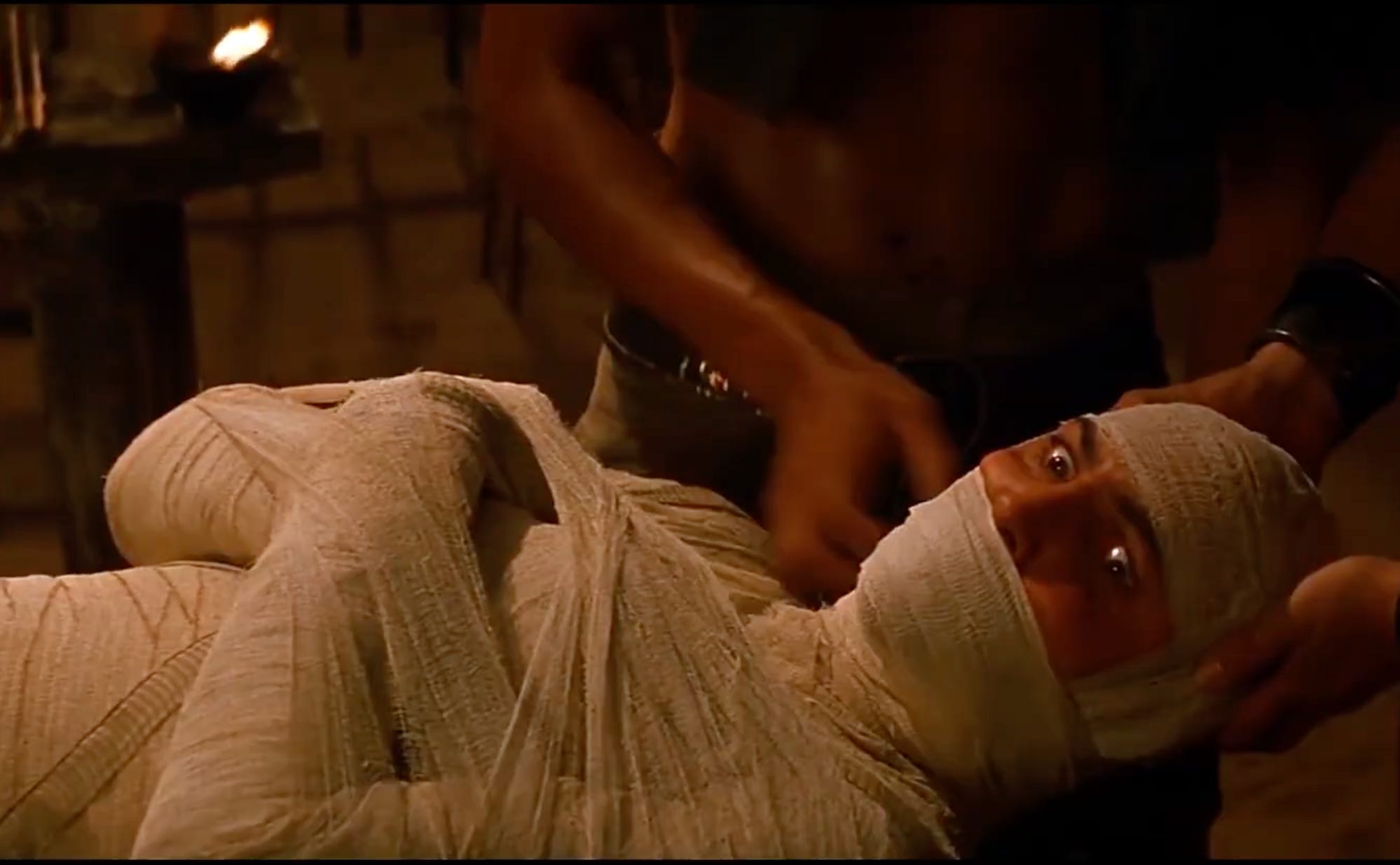
But then there’s the first scene, set in Ancient Egypt, that fully unveils the backstory of the film’s antagonist Imhotep (Arnold Vosloo), showing his ill-fated love story with the Pharaoh’s mistress Anck-su-namun (Patricia Velasquez), his failed attempt to resurrect her, and the ritual that leads to his transformation into an undead Mummy.
Sans the prologue, the film wisely depicts Imhotep as a monstrous creature, whose motives or goals beyond eating people are initially unknown. But what should be gradual revelations about the villain, including his handsome human appearance, are rendered narratively redundant by the prologue.
We already know exactly who the mysterious well-preserved corpse that Rick and Evelyn (Rachel Weisz) find 30-40 minutes later is. We know what he means when he first cryptically mentions the name Anck-su-namun. We know why the Magi kill anyone who manages to find Hamunaptra. A lot of what the main characters learn isn’t new or revelatory to the audience because the prologue has given it away.
All in all, this is a test case for a film where the prologue should’ve been cut.
Bumblebee (2018, dir. Travis Knight)
Bumblebee likewise has two prologue sequences.
First, there’s an extensive sequence showing how Bumblebee got from Cybertron to Earth at the height of a great war between the different Transformer factions and then an Earth-set sequence showing how he lost his voice in battle with a Decepticon.
Both of them are detrimental and completely unnecessary, for nothing that happens in them is of consequence to the actual story the film is telling, which is that of a teenage girl (Hayley Madsen) befriending an amnesiac robot, who initially appears in the guise of a car. All that Bumblebee - and thus the audience - needs to know about his past is revealed later in a flashback at the film’s midpoint. Everything else is just filler and unnecessary over-explanation of things for the “benefit” of the viewer.
Start watching from the scene, where Charlie wakes up to her alarm and Bumblebee is a very different film. Rather than opening with a full-blown alien war, it starts off as a small-scale 80s teen comedy, only to literally transform into a science-fiction film when Charlie’s car suddenly turns into a giant robot. Things gradually escalate and open up from there and who or what Bumblebee is plays out like an actual mystery.
Overall, the demystifying prologue tends to be at odds with the movie that follows and goes against its overall sense of unity (the principle that a film should have everything essential and nothing superfluous). Despite this, it appears in the majority of horror, sci-fi, and fantasy movies made in Hollywood today, meaning many such films no longer take the time to reveal themselves to viewers.
Why does this keep happening? Because Hollywood today hates mystery and literally fears the unknown when it comes to films of these genres, especially horror.
That is, studios don’t believe that audience interest can be sustained unless you give viewers a lot of info upfront and are afraid that viewers might get confused by or bored of the unknown. So they try to demystify the unknown.
There are, of course, exceptions to this. Some recent movies, such as A House with a Clock in Its Walls (2018, dir. Eli Roth), completely avoid prologue sequences.
Sadly, Backrooms is not one of them.
The Backrooms Opening
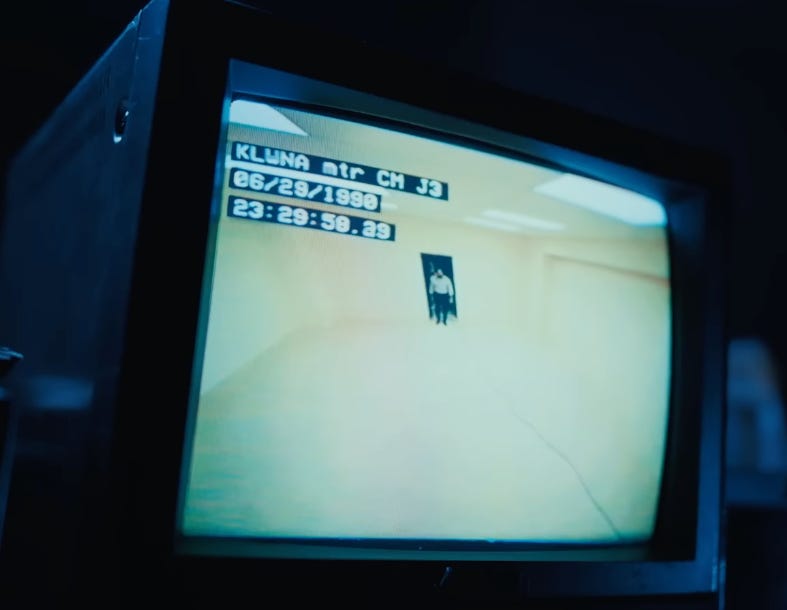
The Backrooms feature film opens with a self-contained “found footage” vignette recorded by one of the researchers of the Async institute, who tries to call for rescue before being chased through the maze and killed by an unseen entity.
Set entirely within the endless yellow office-like corridors known as the ‘backrooms,’ it’s a creepy 5-6-minute sequence that plays to director Kane Parsons’ strengths, being made in a style similar to that of the web episodes he’d created previously.
The problem is that it’s completely irrelevant to the actual story the film is telling.
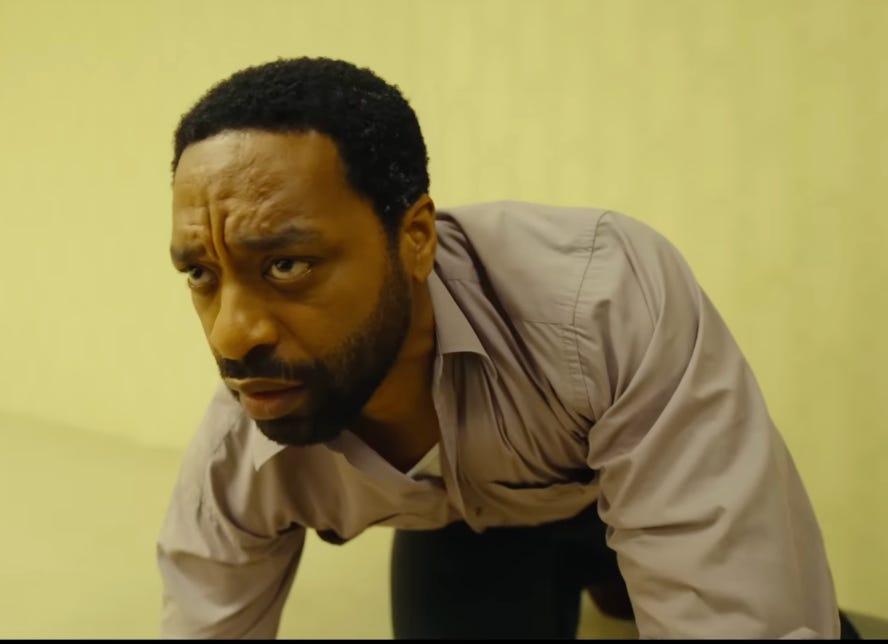
Had it been cut, you’d never notice it was there. Instead, the film would open in the normal, everyday world and establish the life of Clark and his relationship with his psychiatrist Mary, gradually building to the point where Clark inexplicably phases through the wall in his furniture store and ends up inside the liminal yellow space.
Clark’s scenes with his psychiatrist are meant to be setups for his character journey, while weird little problems plaguing his store (like the nonsensical switch in the breaker box) are teases building to the big reveal of the Backrooms dimension.
Except, these sequences aren’t as effective or immersive as they should be because the viewer is on some level waiting for the film to get back to that weird space shown at the beginning, wondering when Clark is going to get there.
The very fact that the film lets us know the Backrooms exist long before Clark does undermines the big reveal. I mean, you can only really reveal something like that once. So, the ‘big reveal’ isn’t really a reveal anymore. It’s a return trip, a second serving. Now, one can argue that the prologue doesn’t completely give away the nature of the Backrooms, with each trip adding to our understanding of it, and it’s clear that we’ve only scratched the surface of it by the time the film is over.
But nonetheless, the prologue spoils the fact that the Backrooms exist, and in the process extends the film’s running time to 110 minutes.*
*Of course, you’d know about the place if you’ve seen the marketing but we’re not concerned with extradiegetic material here.
Honestly, the Async opening would’ve worked much better if it had been released as a web-only promotional tie-in to the movie or, better yet, an exclusive video extra.
This is reinforced by the “Everything’s Gotta Go” edition, which adds a self-contained 15-minute post-credit scene that chronologically precedes the opening and adds more context for it, while likewise doing absolutely nothing for the actual feature.*
*Added to which, the short itself feels a little too long. The middle of it is sluggish and filled with too much detail and exposition.
Of course, cutting the prologue wouldn’t magically fix every single flaw of Backrooms, but it would’ve preserved the film’s biggest surprise until the proper moment and resulted in a tighter, more economical narrative.
And that would’ve made for a better film overall.
But what do you think?
Does the Backrooms prologue work for you? Or do you agree the movie would be better off without it? Can you think of any other examples of demystifying prologues?
Revisio-News
‘Obsession’ Director’s Cut
When talking about Backrooms, it’s hard not to bring up the other big horror movie sensation of Summer 2026 - Curry Barker’s Obsession, which, as of this moment of writing, has somehow grossed over $400 million globally, despite being an indie first time feature of the sort that typically does well on the festival circuit before mostly finding an audience on video and streaming.
Of the two, I think Obsession overall is the more confident and impressive work. And tellingly, this movie opens without a prologue.
Instead, the very first scene immediately introduces its main character and his central dilemma (not being able to confess his feelings). In addition to that, it also sets up some of the film’s core themes, such as the mistreatment and disposability of women.
Nothing in this scene exposes the supernatural or fantastic elements of Obsession.
There is no standalone vignette that shows somebody dying a horrifying death after having made a wish with the Wishing Willow, which I’m pretty sure would’ve been the case if this were a studio picture. No, Obsession starts in what seems to be our real-life world, only for it to transform once the main character makes his choice.
It used to be that studio horror movies could get away with holding things back.
For instance, the first Terminator (1984, dir. James Cameron), deliberately withholds from the audience the fact that Arnold is actually playing a killer robot up until the end of its first act. Meanwhile, Alien (1979, dir. Ridley Scott) doesn’t get to any actual creatures until about 40 minutes into the running time.
Obsession does suffer from the occasional instance of debut amateurishness and excessive gross-out horror schlock. But what I think makes it legitimately special is the masterful command it displays over lighting, tone, mood, and atmosphere.* And the amount of restraint Barker shows in this movie is admirable in and of itself.
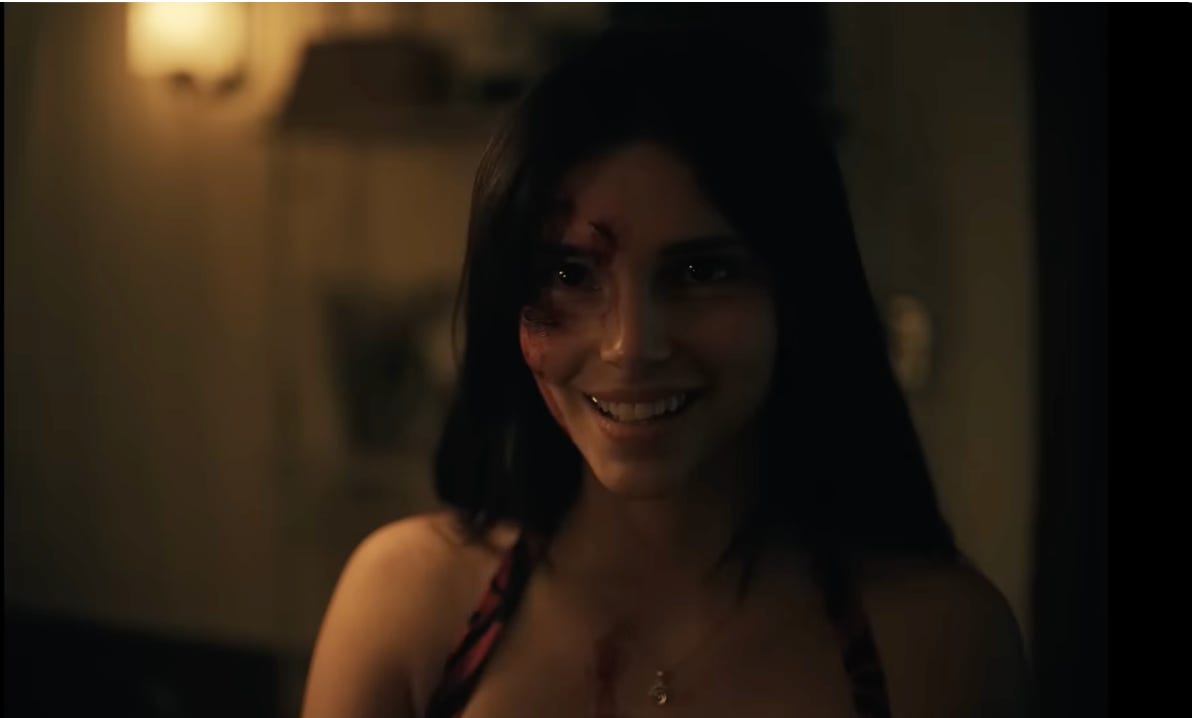
*There are genuinely unsettling moments, where Inde Navarette’s Nikki is filmed clad in shadow or with just a bit of light to illuminate her eyes, and there are also abrupt shocking tonal clashes that brought to mind David Lynch.
Like its competitor, Obsession seems poised to receive an alternate version. On June 2, during an appearance on the Sam Roberts’ show, actress Megan Lawless discussed an upcoming release of the film’s director’s cut, in which her character Sarah receives a longer and darker death scene that would’ve gotten the film an NC-17 rating.
“The cut that was shown at TIFF is longer. The bashing is longer, and Curry had me do ADR of gurgling and moaning noises… You just need to watch it, watch the director’s cut when it comes out….”
Lawless never specified when exactly the longer cut is supposed to come out, which played into the confusion that occurred when Apple TV listed an “unrated” version of the movie upon its digital video premiere on June 30. As it turned out though, this was indeed the theatrical cut, only mislabelled. Since the initial snafu, Apple corrected the listing to reflect the fact that this is the R-rated version.
Going by the currently available information, I don’t think the director’s cut will offer much of a different experience from the theatrical. But I would be quite interested in checking out when it becomes available nonetheless.
‘X-Files 2’ Director’s Cut
And on the topic of confusing alternate cut releases, you might’ve heard a few months ago about a director’s cut of Chris Carter’s second X-Files movie, I Want to Believe. The original theatrical cut came out in 2008 and became a critical and commercial failure.
In June 2025, Carter revealed in an interview for David Duchovny’s podcast Fail Better that he got the go-ahead to make a darker and scarier director’s cut.
“I just got the go-ahead yesterday to do a director’s cut of “I Want to Believe,” the second movie. And I can’t tell you how excited I am about this, because…. I made it too scary, basically, and I was told so by the brass at Fox. And they wanted a PG-13 movie. So we cut it back to be a PG-13 movie…. And now I have a chance to go back and make the scary movie that I always intended. So, it’s not just doing a director’s cut to do a director’s cut. It’s really kind-of bringing to life something that, for me, was on the page, and never got to the screen.”
Half-a-year later, Carter discussed the director’s cut some more for The X-Cast podcast by the amazing FilmStories Magazine. 5 minutes in, the director’s cut comes up.
Per Carter, he and his editor had finalized the cut and had sent it to the studio.
The film originally kept getting cut back due to the PG-13 rating. First, the studio demanded cuts and changes after seeing Carter’s first cut. Subsequently, the film had to be cut back even more due to demands from the MPA ratings board.
“We had agreed to do a PG-13 movie and I didn’t know exactly what that was in everyone’s mind. When we showed them the cut, the first cut, they were… I would call them outraged. They thought it was too scary, they thought it was too gory…. We had to take out a lot of the scary stuff and we had to take out a lot of story. And it left the stuff I didn’t want originally in, and took the stuff I wanted originally out. So, I was able to put all that material in and really fine-tune the cut with that material. We looked at the music again, we looked at FX again.”
From the sounds of things, the director’s cut will be considerably different, with numerous little changes all throughout the picture, and a substantial amount of both new and alternate footage. But when is it supposed to come out?
Allegedly, per the original press release from Disney, the new version was supposed to have premiered on June 11 on Hulu/Disney Plus. However, the listing for it was subsequently pulled, and June 11 came and went without any update.
As of the date of publication, over a month after the initial release date, there is still no update on the movie. However, according to a June 16 article by Polygon, the release was delayed allegedly due to Carter still tinkering with the new cut.
“A source tells Polygon that the Disney Plus delay is due to some last-minute adjustments being made to the film. Those final edits shouldn’t take too long, as we were also assured that the release will be coming later this summer.”
Personally, I’ve never seen I Want to Believe. I was kinda burned out on X-Files by that point, which had run into the ground creatively in Season 9, and the reviews of the movie were almost universally negative. Plus, at the time, the fact that the film was more of a monster-of-the-week type of thing turned me off.
Over the years, though, I have become far more appreciative of the show’s standalone episodes and recognized that the alien conspiracy storylines were never going to add up to anything, so the new version certainly sounds like an opportunity to finally check out this film. Who knows?
Maybe Carter really has improved on what came before.
And maybe it’ll turn out the movie was never as bad as the press has claimed.
UPDATE - 07/17/2026:
According to Gizmodo, the new R-rated director’s cut has been officially announced for an August 14 premiere on Hulu. Supposedly, it has a new title, which is The X-Files: I Want to Believe Vrach Frankenshteyn.
Gizmodo claims that, per Google translate, the two new words mean “Victor Frankenstein” in Russian. Actually, this is incorrect.
“Vrach” is a transliteration of the Russian word “врач,” which is another word for “doctor” but specifically a medical doctor. So, the subtitle of the movie properly decoded means “I Want to Believe Dr. Frankenstein.”
Gremlins Assembly Cut
Earlier this April, an early assembly (or rough) cut of Joe Dante’s horror comedy classic Gremlins (1984) was screened in Los Angeles. Per The Gremlins Museum founder Ian Grant, the following is the story of how the rough cut was found:
“In early 2026, director Joe Dante uncovered two long-rumored VHS tapes containing the original 1983 first assembly of Gremlins, an early rough cut thought to have been lost for more than forty years. Sent to the Gremlins Museum for preservation and restoration, the tapes revealed a raw, alternate version of the film containing over an hour of new footage, including deleted scenes, extended sequences, alternate pacing, unfinished audio, and character moments never meant to be seen by the public.”
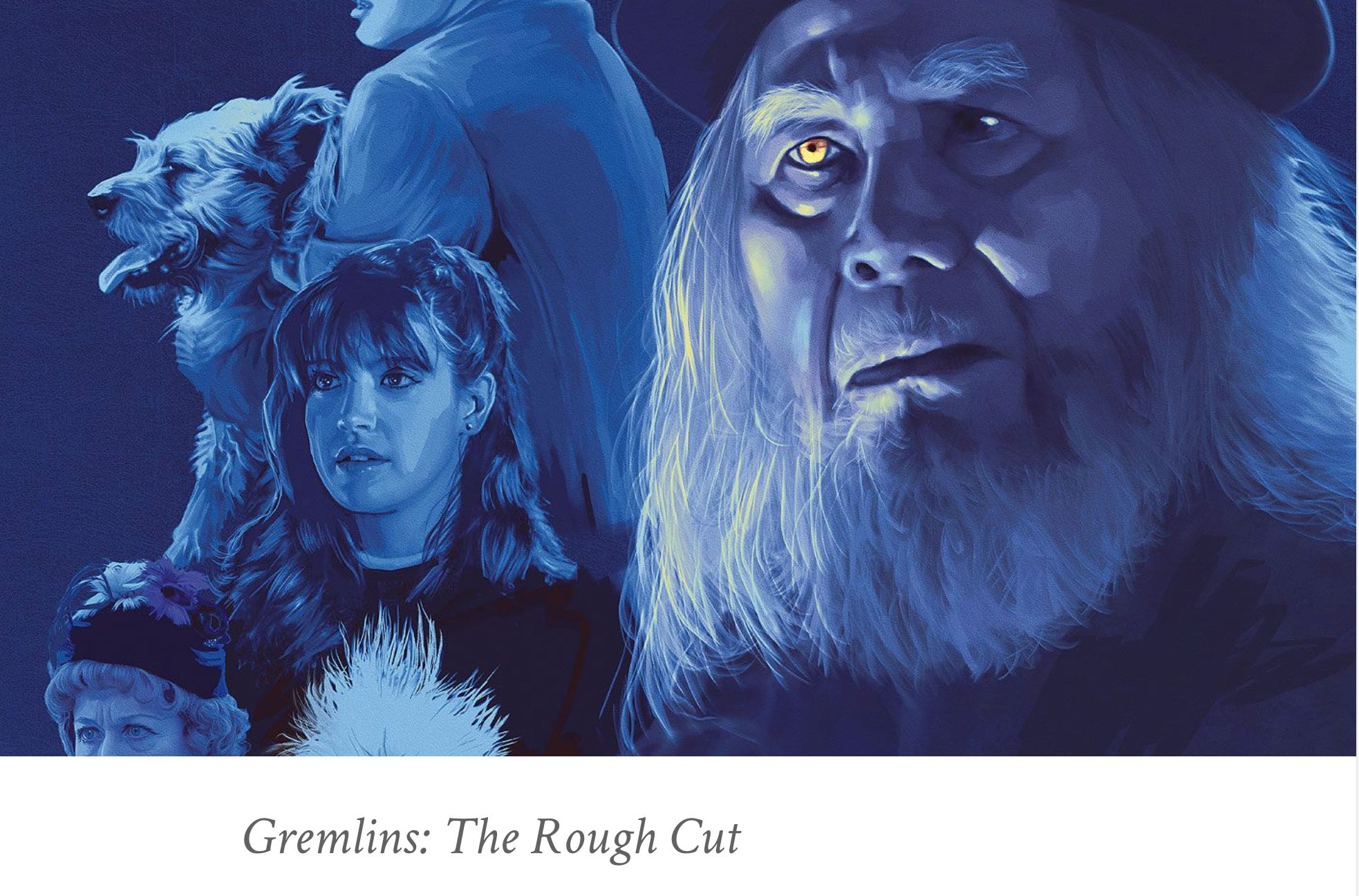
Here’s the thing about rough cuts and workprints: if you are ever lucky enough to see one, you know that they are not really made for public consumption.
The film at this stage is in an unfinished state. On top of being massively overlong and boring, it has not undergone the necessary steps of post-production to be a complete work so all the seams are showing and immersion is impossible.
Making things even more complicated is the fact that the assembly version was only retained on VHS tape, meaning that the “lost footage” was preserved in a very low-quality format, one that has almost certainly degraded over the course of 40 years.
Well aware of all this, Grant subsequently used the available rough cut material to assemble a “Screening Cut” - a more watchable version of the 2 hour 54 minute edit by mixing the rough footage with finalized sound and music.*
*I am a little unclear on this but perhaps he also used final film footage as well?
This is the version that played in Los Angeles to a select audience (mostly filmmakers and industry people, as I understand). Judging from the responses so far, it has proven to be quite impressive, with a lot of previously unseen material that even some of the people involved in the making of the film had forgotten about, despite the low quality.
But will mass audiences ever get to see this version?
As Grant admits towards the end of his post:
“As a Warner Brothers/Amblin property, I’m not able to distribute it publicly, nor is it really mine to give out. My hope is that we can host a number of screenings where people can experience this together for the first time. I also think Warner Bros. Archives could consider it as a standalone release or potentially include it in a future Blu-ray set with Gremlins 3 around the corner…. I’m hoping to also get permission to do fan screenings in the future, so please stay tuned if that comes to fruition.”
So, while there’s no guarantee that the Screening Cut will get an official release in the future, but it’s hard to imagine that it won’t, given the ongoing popularity of the Gremlins franchise and the work that went into this preservation.
If you ask me, the best way to present it would be to include all the deleted scenes, alternate footage and outtakes as bonus materials on a 4k BluRay reissue.
After all, when you are used to HD quality and BluRay resolution, watching rough unfinished scenes sourced from videotape can be an excruciating experience.
But what do you think?
Is Obsession a better movie than Backrooms? Is X-Files 2 underrated? Any interest in checking out the super-long but likely very boring rough cut of Gremlins? Any other thoughts?
Good point about the prologues.
Seen that brought up in relation to the overly detailed light novel titles. Word is that because there is SO much competition for attention, you have to grab audience's interest as fast as possible or they go wandering off to something else.
Though recently some of us learned about the B stream (https://thebstream.com/) and a few minutes on there we were ready to watch several options just seeing some trailers.
There's a reason it's called "art" and not "science" because it is a trick. You don't want to waste your audience's time. On the other hand, you do need to let the story breathe too. There's no "one right answer" but each piece has its own unique needs, and it's on you, the artist and creator to figure out where that line is going to be.
I had a very similar experience when I attended Obsession with a bunch of noisy teens and I was bemused by their behaviour. I looked at it less as a violation of etiquette and more as a blissful ignorance of it. Some of these kids have barely been to cinemas as young adults and I think some of us old grumps forget that. Further, having attended films around the world I have come to realize that the North American and European filmgoing experiences (though the two also have their differences) differs wildly from other parts of the world where phones, chat, verbal interactions with the screen, coming-and-going and even live-streaming (!) are quite acceptable. Now we're seeing that on a generational basis as well as a cultural one, with the impact of Covid, streaming, etc. on the kids. I've come to the conclusion that if they are attending, spending and enjoying themselves then that's plenty for me.